FDP: An Insider's Perspective
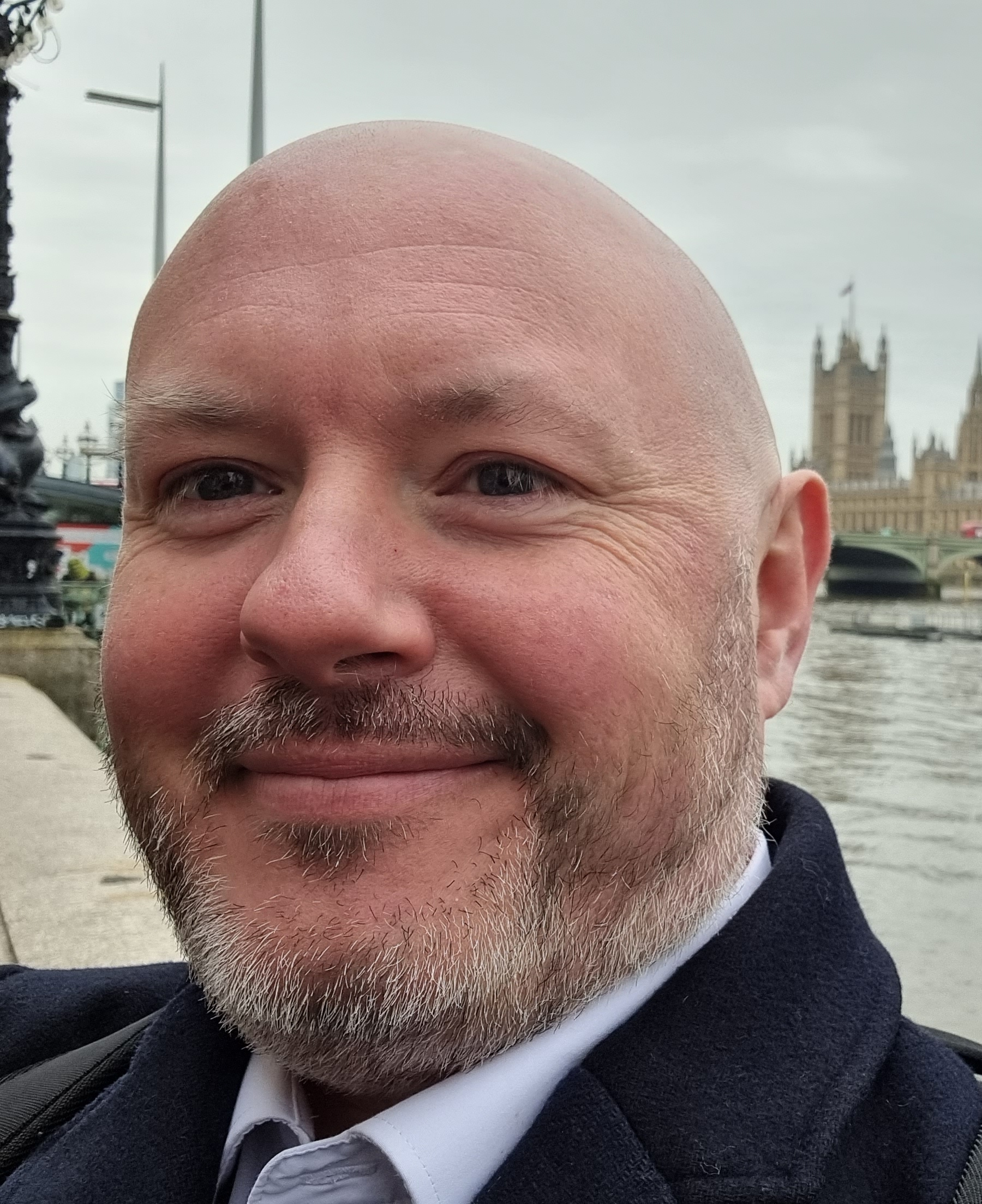
Why I'm Speaking Up
For three and a half years I led a team of 150 engineers at NHS England, building the Federated Data Platform. Before that I spent nearly 20 years building data platforms and data teams inside NHS Trusts. I have seen every layer of the NHS data stack, from a ward clerk's spreadsheet to a national real-time dashboard used by the Chief Executive of NHS England.
I left NHS England last month. I took voluntary redundancy because the organisation is being restructured and I did not want to spend the next 12 months treading water. I still believe in the mission. I set up Bartlett Data Ltd to keep working on it from the outside.
I am not speaking up because someone asked me to. Nobody from NHS England, Palantir, or anyone else has encouraged or paid me to say any of this. I am speaking up because I have watched the public debate about FDP become so detached from the technical reality that it is now actively harming the NHS.
The debate I've been following
For the past two years I have watched people who have never logged into the system confidently explain what is wrong with it. I have read articles describing the platform as dangerous, useless, or both, written by people who could not tell you what it actually does. I have watched politicians deliver theatrical letters to Palantir's office demanding contract termination, without ever asking what would replace it. I have seen union leaders call for boycotts of software that is helping get patients out of hospital faster. I have read academic critiques applying vague five-point tests that could be used to disqualify any technology programme in history.
I have seen claims of "structural vendor lock-in" from people who do not understand the architecture, nor the daily interventions of intelligent and conscientious NHS data engineering teams to protect against this risk. I have seen fears about data theft based on a fundamental misunderstanding of how the technology works. Palantir does not have the keys to NHS data. Trusts do. The system works the same way as any other software: you use the tool, you control the data. Nobody accuses Microsoft of stealing your documents because you wrote them in Word.
I have seen calls for a "modular platform built by UK tech experts" from people who have never delivered technology at NHS scale. In 20 years of working in the NHS, nobody came up with anything like the FDP - but now some folks seem to think they can do something equivalent or better at the drop of a hat. The NHS has a long history of trying to build its own national technology. The National Programme for IT cost billions and was abandoned. The idea that we could throw together a consortium and build an alternative in time for the break clause is not a serious proposal. The only option other than FDP with Palantir is to stop trying to integrate the NHS' data and for the next year or two accept a siloed, fragmented estate, still dominated by American companies with no guarantees about where to go next.
Critics frequently raise the cost of the Palantir deal, which is £330m over 7 years. Per the 200+ NHS organisations in England this works out as extraordinary value at around £200k per year per org. Compare this with far higher data processing costs incurred currently. Even relatively modest setups pay the likes of Microsoft £100k/year for basic licensing alone. Critics do not attempt to calculate the costs we were previously sleepwalking towards if Trusts continued to independently move their data functions into (almost always American) cloud data processing services such as Microsoft Azure or AWS.
I have seen ethical objections that apply a standard to one supplier that is never applied to any other. We all use Microsoft despite Bill Gates' associations with Jeffrey Epstein. Thousands of GP practices run on TPP's SystmOne despite its founder's remarks about Diane Abbott. Britons elected a Labour government, giving power again to a party that supported the Iraq war. None of us are in a position to claim that every organisation we work with is beyond reproach. The question is not whether Palantir's leadership have said objectionable things. They have. The question is whether the platform works and whether patients benefit from it.
There is a more fundamental point that almost nobody in this debate is making. The procurement that selected Palantir was conducted under UK procurement law as it stood at the time. The evaluation assessed financial, commercial, security, and technical capability. The ethical reputation of the supplier's parent company, its founder's political views, or its work in other sectors were not evaluation criteria, and under the regulations that governed the process, they could not have been. The new Procurement Act 2023 broadens the criteria to include social value and public benefit, but even under the new rules, award criteria must relate to the subject matter of the contract. If campaigners believe that a supplier's global activities should disqualify them from NHS contracts, they need to be pushing for a change in procurement law that makes that possible, not attacking a programme that followed the law as written. Objecting to the outcome of a lawful process while leaving the process itself unchallenged is treating the symptom, not the cause.
And I have seen unnamed sources cited as proof that NHS technical staff are "boycotting" the system. In my experience, some team members were uncomfortable with the political associations of the supplier. We respected that. That is normal management. It is not a boycott, and it tells you nothing about whether the platform works. This to me reinforces the point: most of the criticism is pure noise.
Nobody is mounting an effective, public defence of FDP
The most frustrating part of watching this debate unfold was that the only person who spoke up publicly in defence of FDP was the head of Palantir's UK operation. He was immediately dismissed, and the Times accused of weak journalism. Of course he would say that, people argued. He runs the company. The people who know the platform best are the ones least able to defend it, because their association with it disqualifies them in the eyes of critics. Everyone else with direct knowledge was inside NHS England and bound by institutional caution that prevented them from engaging with the debate publicly.
I am no longer inside NHS England, and so I am no longer bound by the institutional caution that comes with working inside a government organisation. I have no commercial relationship with Palantir, and no interests to declare. I do have 22 years of experience building data systems in the NHS, three and a half years of building FDP at national scale, and a strong view that the platform works, that its potential has barely been scratched, and that the political noise is doing real damage to something patients need.
My 'Insider' View
The platform works. It is rated green by NISTA, the Treasury's own infrastructure authority, a rating that only around 15% of major government programmes achieve. 123 Trusts are live. 80 are reporting measurable benefits. 110,000 additional patients have had operations. Nearly 300,000 patients have been discharged faster. Cancer diagnosis times have improved. Waiting list management has improved. These are not Palantir's numbers. They are published by NHS England.
The potential is barely scratched. Right now Trusts have access to a handful of nationally developed products. That is like having an iPhone and only being allowed to use the calculator app. The data warehouse capability and the Solutions Exchange, which will create a marketplace for third-party applications on the platform, are about to change that dramatically. The real power of FDP is not the six products that have been delivered so far. It is the standardisation of data across the NHS for the first time, which means staff can move between Trusts and be productive immediately, Trusts can share code and products with each other, and technology companies can build once and deploy everywhere. The Canonical Data Model provides a translation layer that allows data collected in different applications and different organisations to come together and be used in single applications. Last year's 'Build with FDP' event in London gave rise to dozens of innovative applications of the FDP - the best three of which are being sponsored by NHS England for further development and roll out.
There is no credible alternative to FDP with Palantir right now. The calls for a British-built replacement sound inspiring but there is no delivery plan, no timeline, and no named consortium. If the break clause were triggered tomorrow, there would be nothing to replace FDP with. The NHS would go backwards, not forwards.
The political noise is causing real harm. I was at the Rewired conference two weeks before I left. I spoke to technology companies who told me they were holding off investing in FDP because they had read the negative coverage and were not sure the programme would survive. I spoke to Trust leaders who said FDP was not their priority because of the uncertainty. The campaign against Palantir is not just failing to help the NHS. It is actively making things worse.
What comes next
I did not leave NHS England to become a commentator. I left to do practical work helping Trusts and technology companies get genuine value from data. But I realised that if nobody was willing to say publicly what most people inside the programme know privately, the platform risked being killed by a debate that had nothing to do with whether it works.
Over the coming weeks I will be writing in more detail about what FDP actually does, where it falls short, and what Trust leaders need to understand before making adoption decisions. I am also developing a practical guide, the FDP Playbook, which will be available on this site shortly.
If you are a Trust leader trying to make sense of FDP, a technology company trying to understand the NHS data landscape, or a journalist who wants to talk to someone who has actually built the thing rather than campaigned against it, I am happy to talk.
Tom Bartlett
Founder,
Bartlett Data Ltd


Tom, this is a wonderful and thoughtful piece. No agenda. Just good systems thinking. Great articulation. Respect for taking this stand. Ultimately, we all want better health outcomes for the UK... that comes through strongly here. Thanks for writing this. Glenn, Founder & CEO, Fueld AI.
Thanks for writing this; I will be very interested to read detailed, factual discussion of these issues.
As someone with a data background but no direct Palantir experience, I'd be curious to hear more about where FDP differs from platforms like Snowflake or Databricks. The operational application layer is the most plausible answer, but it would be great to see more detail on this. Most of the publicly available material is very high level.
The 110k additional operations figure is based on a year-on-year comparison, during a period when elective recovery funding was increasing. Trusts that adopted FDP early were also plausibly better resourced and more digitally mature than average. None of that means FDP didn't contribute but those factors make the number very difficult to interpret as evidence of FDP's impact specifically. The same applies to…
Tom what are your thoughts about Oracle Health Data Intelligence and SPR as an alternative, in certain context as opposed a full replacement?
Building a data warehouse inside Palantir sounds technically, politically, and ethically full of risk. The NHS must (and must have the capacity to) build a vendor neutral AI stack/data warehouse.
The decision to work with Palantir was political, and the decision to jettison Palantir will be also. NHSE should have invested time in being able to move beyond Palantir, not making itself dependent on it. There is still time, and the need, to specify a vendor neutral approach.